Cloud Forest, Singapore
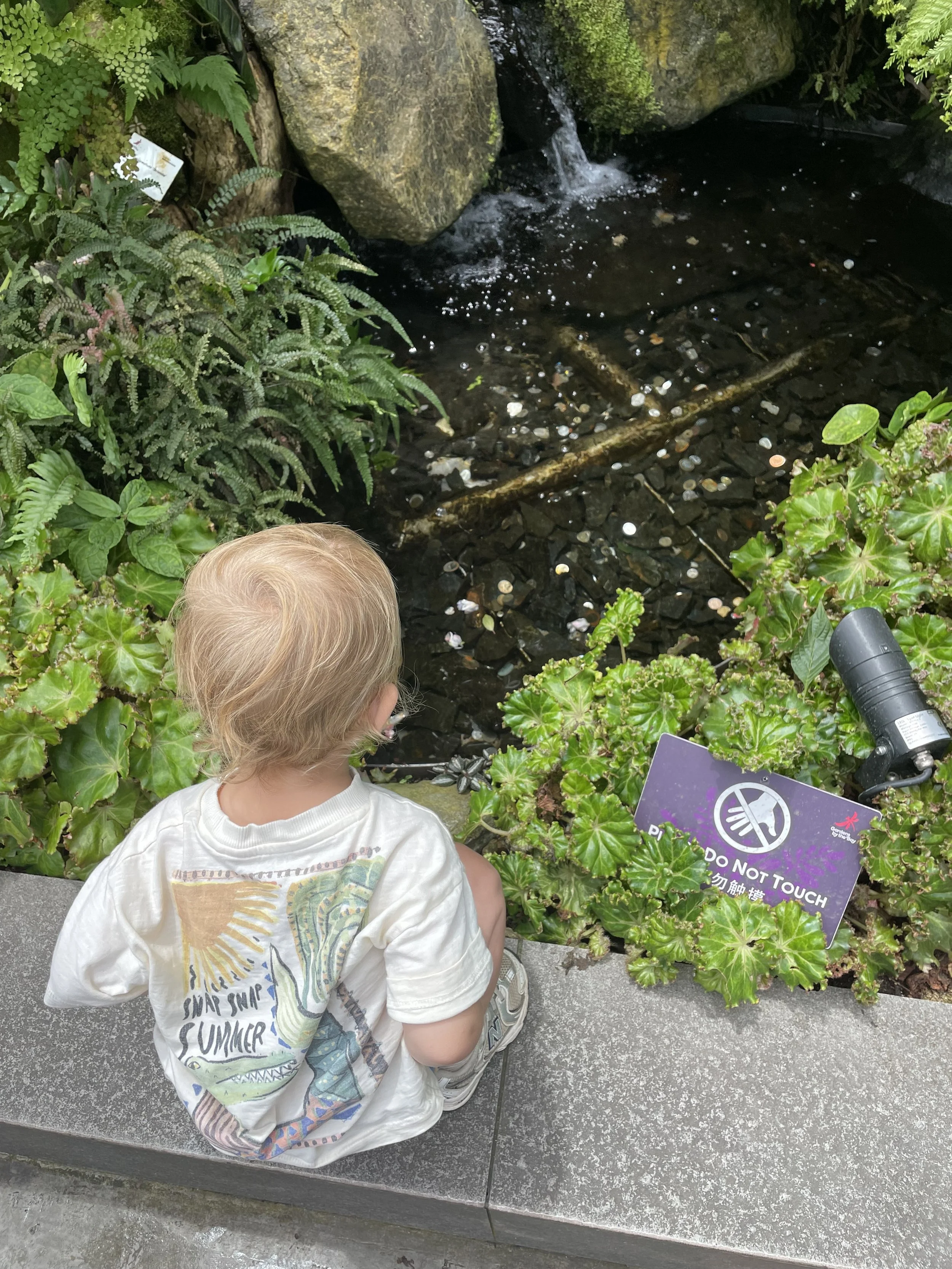
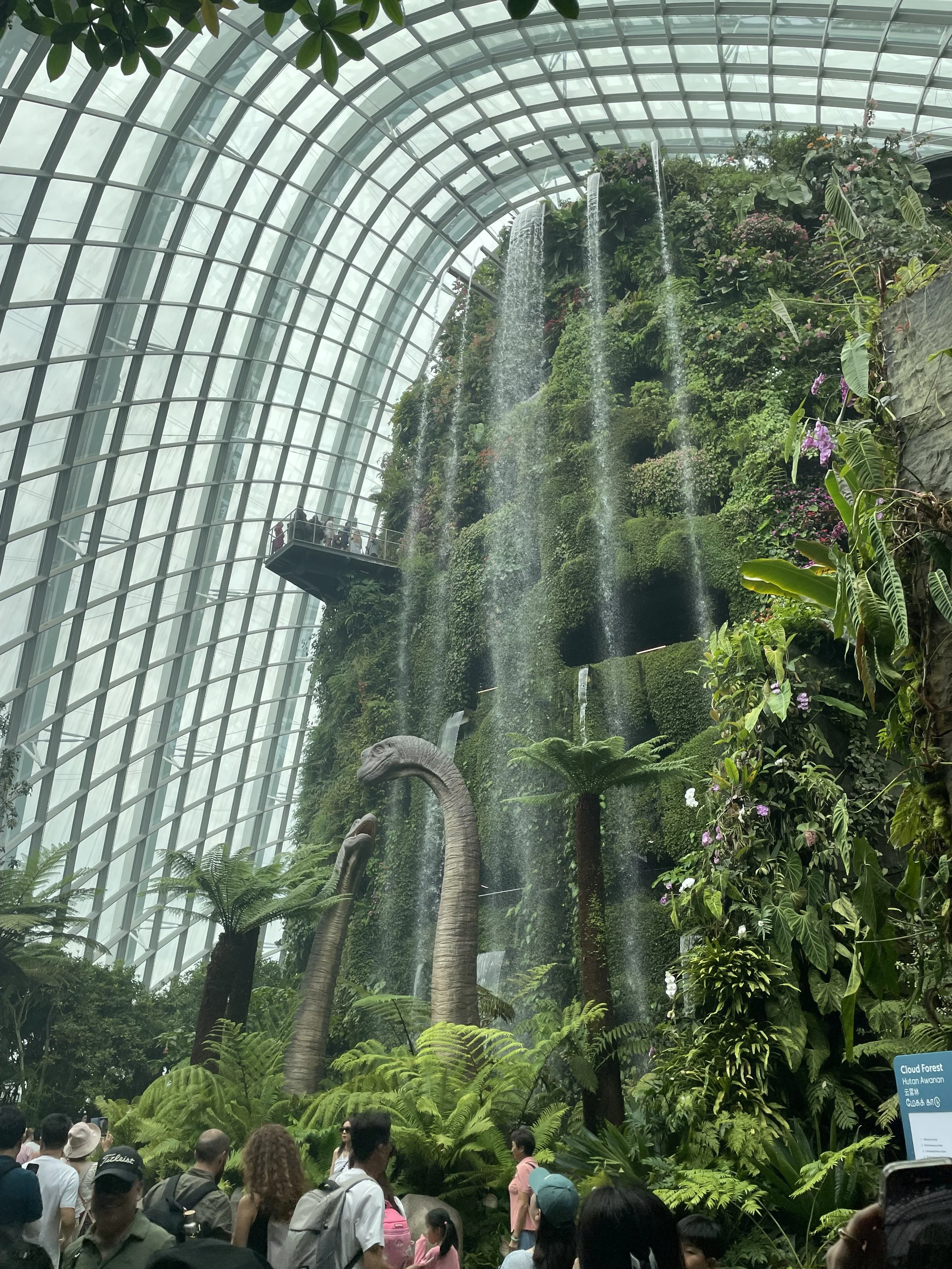
Visiting the Cloud Forest just days after arriving in Singapore felt like stepping into a breath of fresh, chilled air, both literally and emotionally. I went with my toddler, a little boy who was captivated from the moment the mist rose around us. What truly lit up his imagination was the Jurassic World exhibition woven through the space. Weeks later he is still talking excitedly about the brachiosaurus, retelling the moment it loomed above us as if we had stepped straight into his storybooks. Seeing his wonder was a joy, but as a landscape architect I found myself observing the environment on two levels, the child’s sense of awe and my own curiosity about how this spectacle was created and sustained.
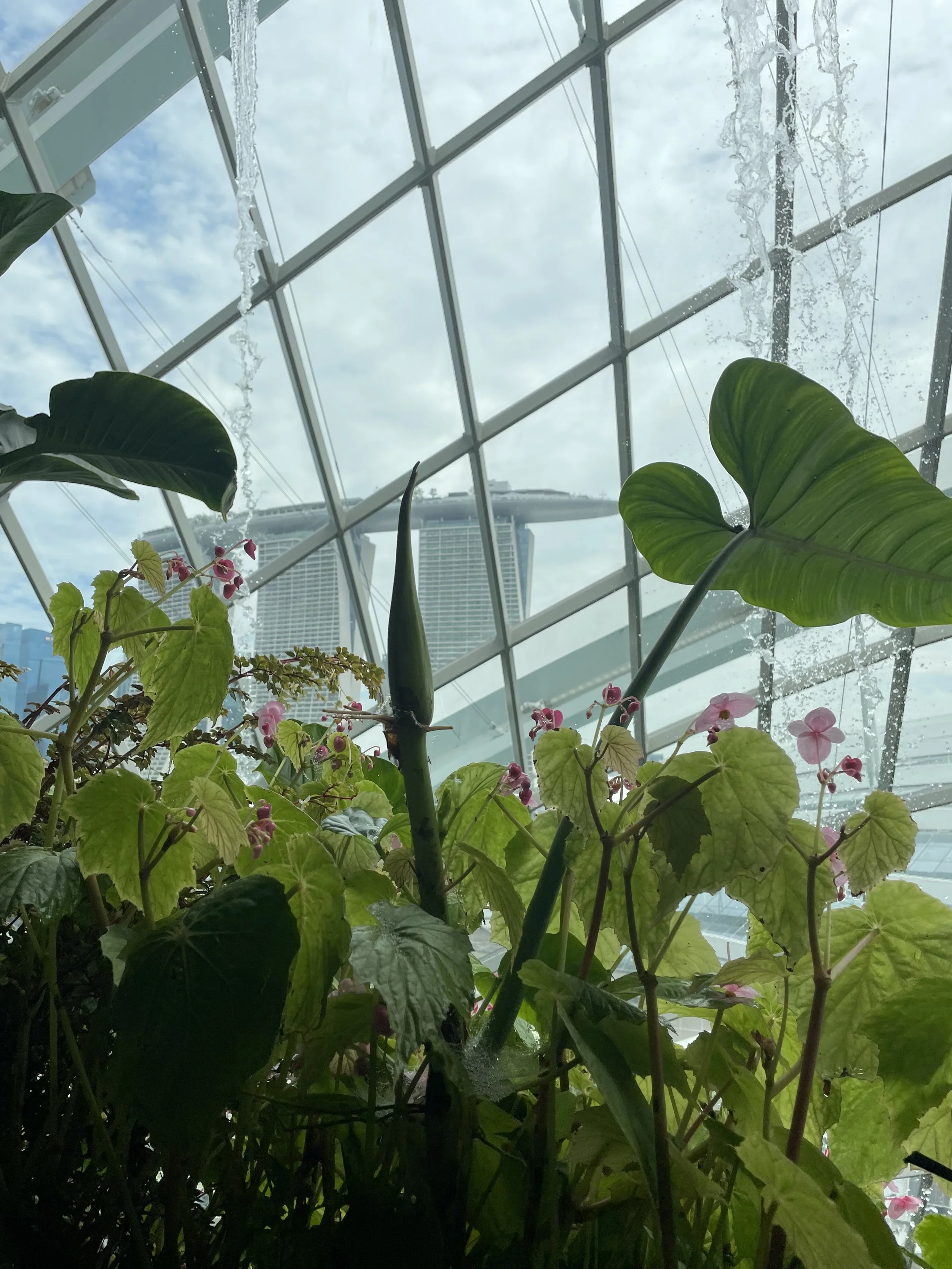
The Cloud Forest was not a garden for relaxing in, it was an exhibition, a carefully controlled piece of environmental theatre. Every element, from the temperature and humidity to the lighting and sound, was meticulously choreographed to support both the planting and the immersive displays. At times I could not help wondering about the sustainability of maintaining such a complex microclimate, and what layers of energy, technology, and horticultural labour make a place like this possible.
Crowds wound their way through the walkways, phones raised, each person trying to claim the best angle of the waterfall, the canopy bridge, or the dinosaur figures. The momentum of people gave the experience a sense of constant movement, more like navigating a popular museum exhibition than entering a landscape. It made me think about how spectacle can dominate pace, setting a rhythm that leaves little room for personal pause.
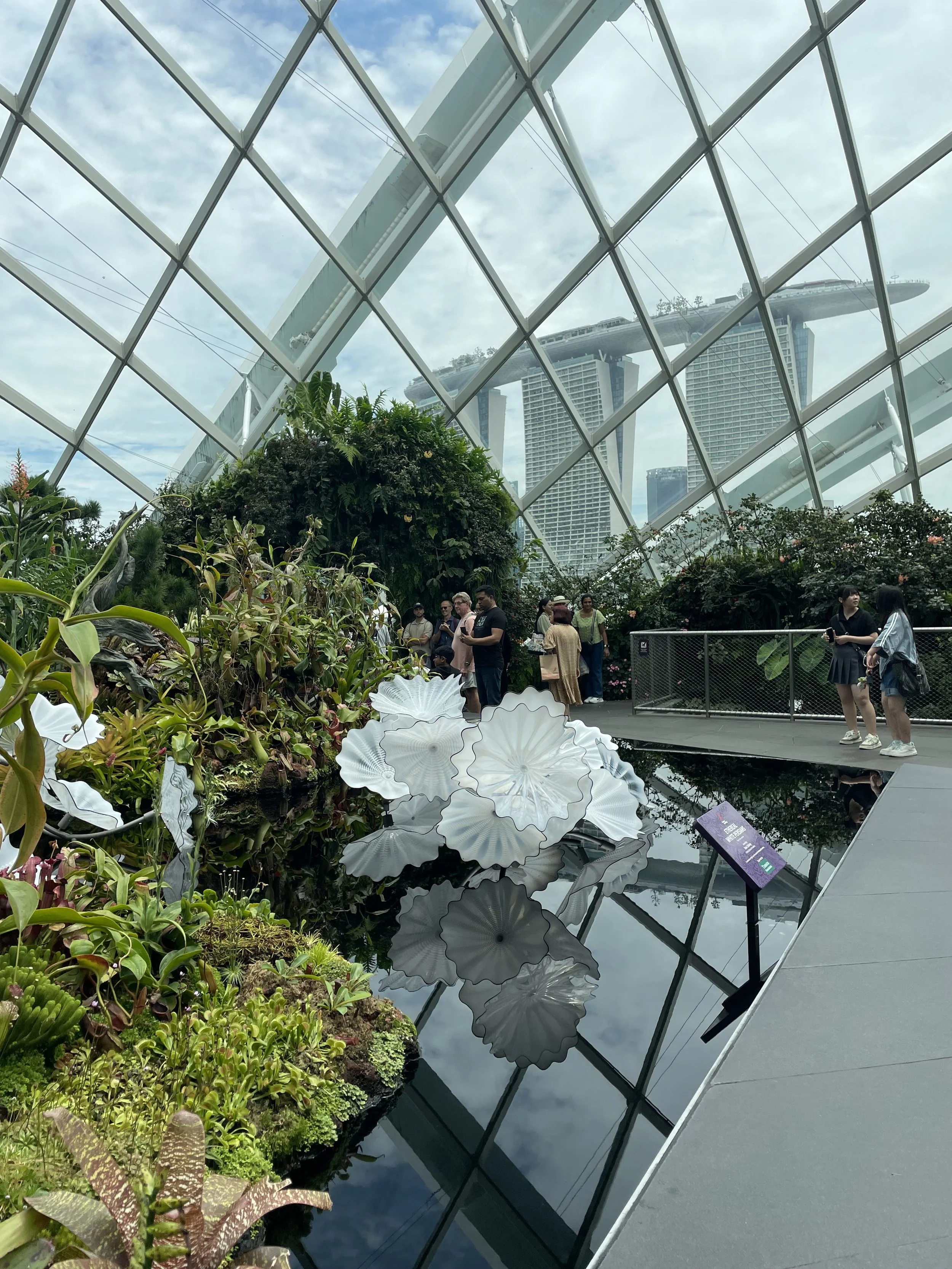
Even so, certain moments cut through the noise. The view across to Marina Bay Sands, framed by the glass and reflected in the black, mirror like water, is an image that has stayed with me. There was a quiet clarity in that moment, where architecture, water, and landscape aligned with unexpected subtlety, a brief stillness held inside all the activity.
Walking down with my little boy still buzzing with excitement about the dinosaurs, I felt both exhilarated and slightly overwhelmed. The Cloud Forest is extraordinary, ambitious, and undeniably impressive, but it is not a space designed for lingering. It is designed for impact, for absorption, for performance. And while that sits outside the type of garden experience I usually study or design, it offered its own valuable reminder, that landscape can challenge as much as it can calm, and that theatricality has its own place within the world of designed environments.